
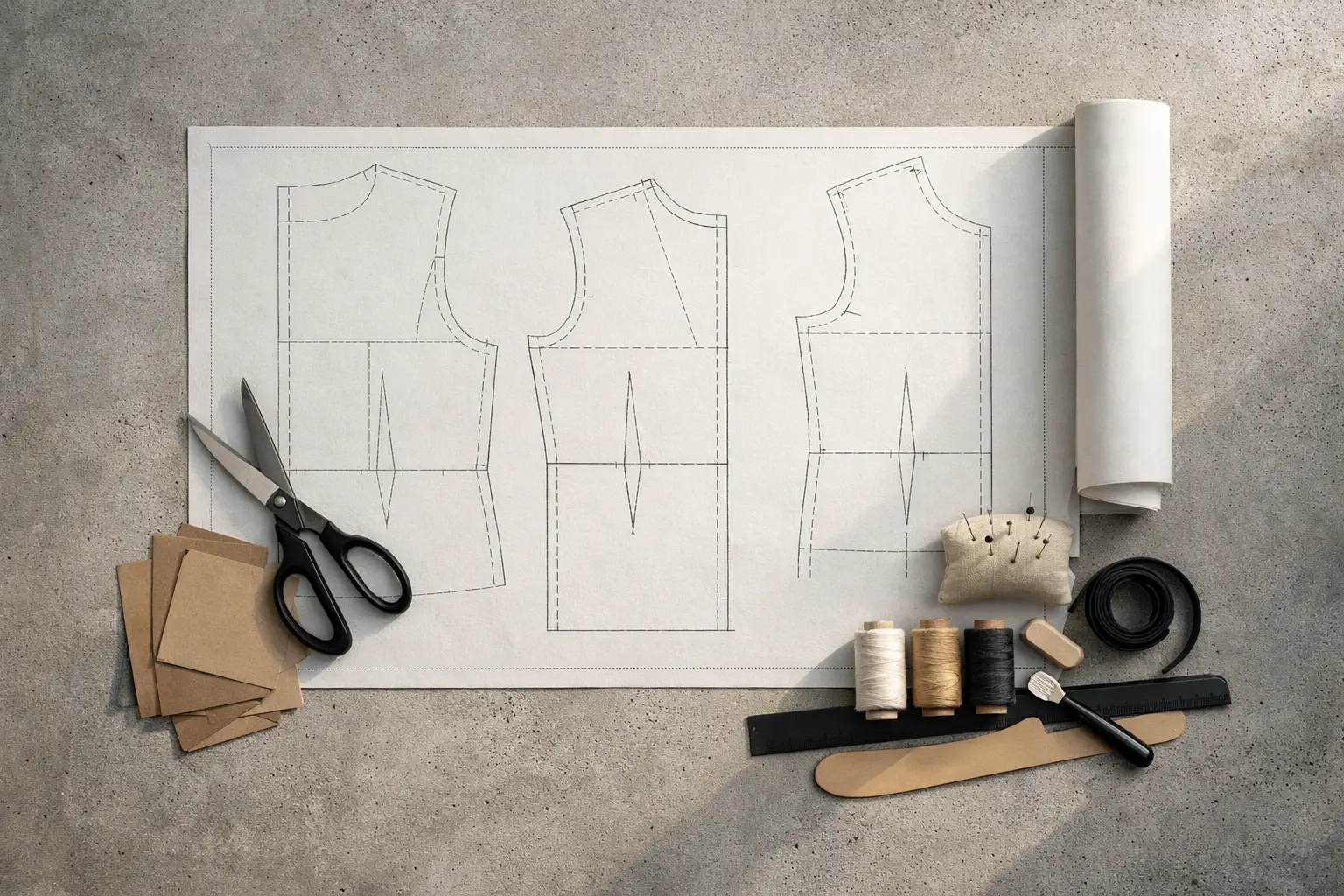
If you’ve downloaded your first PDF sewing pattern, you’ve probably noticed it comes with several file formats.
The two you’ll see most often are A4 and A0.
For beginners, this can be confusing. Which one should you print? Is one more accurate? Is A0 only for professionals? Can you sew successfully using either format?
The good news is that both A4 and A0 sewing patterns contain exactly the same pattern pieces. The difference isn’t the pattern itself—it’s simply how it’s delivered.
Choosing the right format can save hours of preparation, reduce frustration, and make your sewing experience much more enjoyable.
In this guide, you’ll learn exactly when to use A4, when A0 makes more sense, how much each option costs, and which format is best for beginners.
What Is an A4 Sewing Pattern?
An A4 sewing pattern is designed to be printed on standard A4 paper using a home printer.
The pattern is divided across multiple pages that you print, trim (if necessary), and tape together before cutting your fabric.
For many home sewists, A4 is the most familiar option because it doesn’t require any special equipment or visiting a copy shop.
The biggest advantage is convenience.
You can purchase a pattern and start sewing immediately.
This makes A4 especially useful for beginners who are still building their sewing setup.
Every clothing and bag pattern at DADI Design includes an A4 version, allowing you to begin sewing the moment you download your files.
What Is an A0 Sewing Pattern?
An A0 sewing pattern is printed on one or more large-format sheets.
Instead of assembling dozens of pages, you simply unfold the printed sheet and begin cutting.
Many copy shops can print A0 patterns quickly and relatively inexpensively.
The pattern itself is identical to the A4 version.
The only difference is that the entire layout appears on large sheets instead of many small ones.
For sewists making garments regularly, A0 often becomes the preferred option because it removes one of the most repetitive parts of sewing: taping pages together.
A4 vs A0 Sewing Patterns: The Main Differences
| Feature | A4 | A0 |
|---|---|---|
| Home printer | ✅ Yes | ❌ No |
| Copy shop required | ❌ | ✅ Yes |
| Assembly needed | ✅ Yes | ❌ No |
| Ready to cut | After taping | Immediately |
| Storage | Compact digital file | Large printed sheet |
| Ideal for beginners | ✅ Yes | ✅ Yes |
| Best for frequent sewing | Good | Excellent |
Neither format is more accurate.
If both are printed at 100% scale, they’ll produce identical garments.
Which Format Is Better for Beginners?
Many beginners automatically choose A4 because they already own a printer.
That’s a perfectly sensible choice.
Printing at home lets you begin immediately without leaving the house.
However, beginners are often surprised by how much time assembling an A4 pattern can take.
A dress might require 30–60 pages.
A jacket can require even more.
If you don’t enjoy trimming and taping paper, an A0 print may actually make your first sewing project feel much less intimidating.
What’s most important isn’t the format—it’s choosing a beginner-friendly pattern.
If you’re just getting started, these guides can help:
- How to Choose a Beginner Sewing Patterns PDF
- Best Beginner Sewing Patterns Clothes
- 10 Best Beginner Clothing Patterns to Sew
- 12 Beginner Sewing Projects for Adults
- 12 Beginner Sewing Patterns to Try
When A4 Is the Better Choice
A4 is ideal when you:
- want to start sewing today
- own a home printer
- only sew occasionally
- don’t mind assembling pages
- need to print just one size
It’s also useful if you only want to print selected pattern pieces instead of an entire large sheet.
Because modern PDF patterns include layered sizing, you can often print only the size you need, making assembly much cleaner.
When A0 Is Worth It
If you sew regularly, A0 quickly becomes a favourite.
Instead of spending thirty or forty minutes assembling paper, you simply unfold the printed sheet and begin cutting.
This is especially helpful for larger garments like jackets, oversized tops and skirts where pattern layouts become more complex.
Many experienced sewists eventually switch almost exclusively to A0 or projector files because they spend far more time sewing than preparing.
What About Projector Files?
Today, many PDF patterns include a third option:
Projector sewing files.
Instead of printing anything, the pattern is projected directly onto your fabric.
If you’ve never tried this workflow, it’s worth learning about.
Our guide:
Projector Sewing Patterns for Beginners: The Complete Guide to Sewing Without Printing
explains how projector sewing works, what equipment you need and why many modern sewists have stopped printing patterns altogether.
Do A4 and A0 Produce Different Results?
No.
This is probably the biggest misconception.
A correctly printed A4 pattern and a correctly printed A0 pattern are identical.
The seam allowances, grainlines, notches and finished garment measurements never change.
Always print the test square before cutting your fabric.
Whether you’re using A4 or A0, correct scaling is what guarantees an accurate fit.
Which Format Saves More Money?
At first glance, A4 seems cheaper because you print it yourself.
However, the real cost depends on how often you sew.
Home printing includes:
- paper
- printer ink
- tape
- time
A0 printing costs a little more upfront but eliminates nearly all preparation.
Many sewists happily pay a few dollars for A0 printing because it saves an hour of assembly.
If you make several garments every month, that time quickly adds up.
Patterns That Work Beautifully in Both Formats
Every DADI Design sewing pattern includes multiple PDF formats, allowing you to choose the workflow that suits you best.
If you’re looking for beginner-friendly projects, these are excellent choices:
Clothing
- Hooded Kimono Top Sewing Pattern PDF | Slouchy Cropped Hoodie
- Minimalist Bomber Jacket Sewing Pattern PDF
- Drawstring Ruched Back Top PDF Sewing Pattern
- Raglan Shirt PDF Sewing Pattern
- Balloon Skirt PDF Sewing Pattern
- Knee-Length Bubble Skirt Sewing Pattern PDF
These patterns feature modern silhouettes, detailed instructions and beginner-friendly construction.
Bags
If you’d rather start with accessories, bag sewing is another great way to learn.
The Origami Slim Backpack PDF Sewing Pattern (Fits 15″ Laptop) is an excellent project for sewists who want to build practical sewing skills while creating something they’ll use every day.
You can also improve your techniques with these tutorials:
Choosing the Right Fabric Matters Too
The printing format doesn’t affect the finished garment—but fabric certainly does.
If you’re making oversized clothing, choosing the right material makes construction easier and improves the final result.
These guides can help you choose confidently:
Why Modern PDF Patterns Offer More Than Just A4 and A0
Today’s best sewing patterns aren’t simply digital copies of traditional paper patterns.
Professional PDF patterns often include:
- A4
- US Letter
- A0
- Projector files
- Layered sizes
- Illustrated instructions
- Instant download
This flexibility allows every sewist to work the way they prefer.
Whether you’re printing at home, visiting a copy shop or sewing with a projector, the same pattern adapts to your workflow.
That’s one reason many modern makers have moved away from traditional paper patterns.
If you’re still deciding which format suits you, read:
- Paper Sewing Patterns vs PDF: Which Sewing Pattern Is Better?
- Why Modern PDF Sewing Patterns Work
- Pay What You Can Sewing Patterns: Affordable PDF Sewing Patterns for Every Maker
Final Thoughts
There isn’t a universal winner in the A4 vs A0 sewing patterns debate.
The better choice depends on how you like to sew.
Choose A4 if you want immediate access using a home printer and don’t mind assembling pages.
Choose A0 if you’d rather skip the preparation and start cutting straight away.
Whichever format you prefer, the pattern itself remains exactly the same.
At DADI Design, every sewing pattern includes A4, A0, US Letter and Projector files, so you’re free to choose the workflow that fits your sewing space, budget and experience level.
The best format is the one that gets you from download to finished garment with the least frustration—and the most enjoyment.
Leave a Reply
You must be logged in to post a comment.