
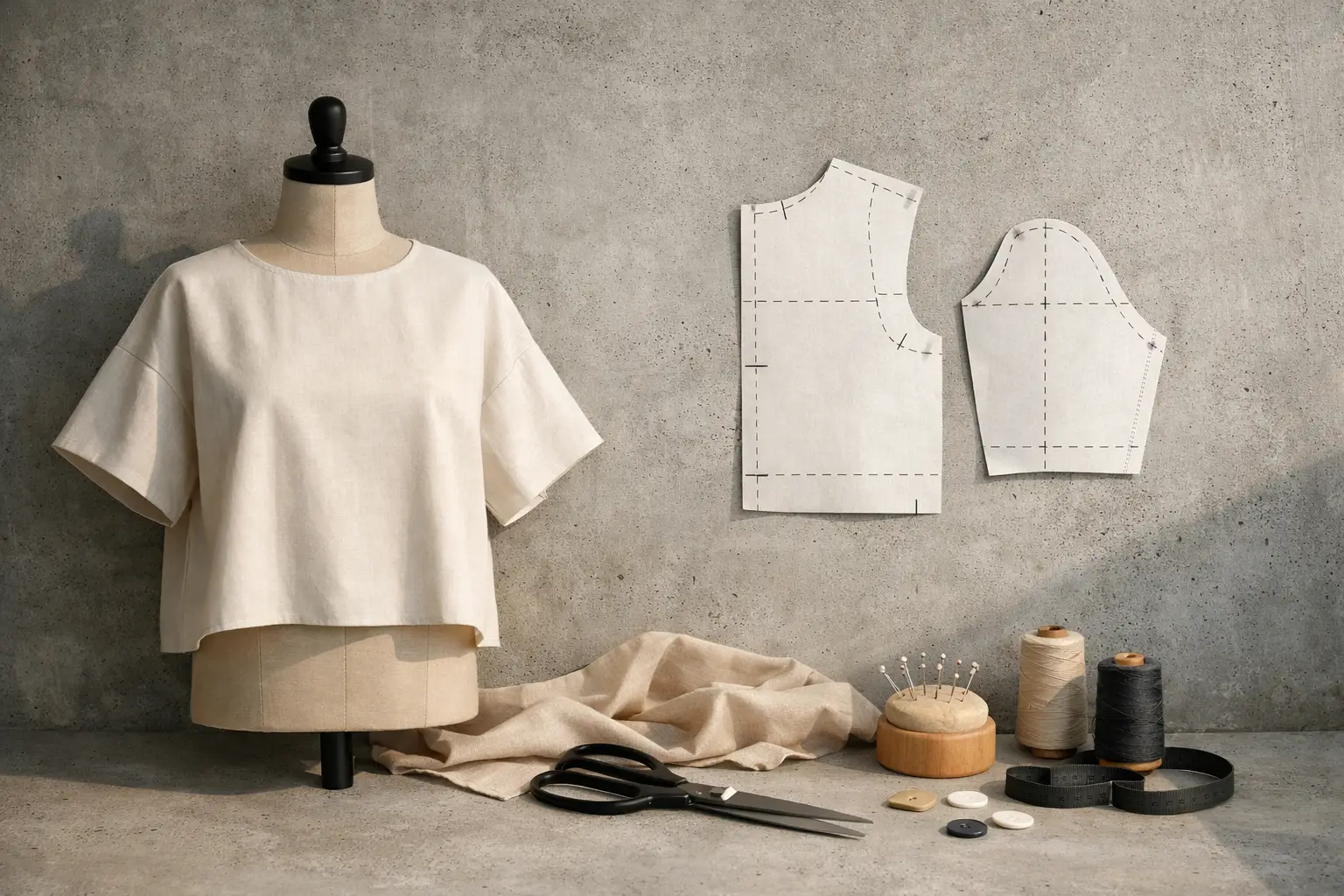
If you’ve ever looked at a fitted blouse pattern and immediately worried about darts, facings, or complicated fitting adjustments, you’re not alone. That’s exactly why boxy top sewing patterns have become one of the best choices for beginners.
A well-designed boxy top gives you room to learn. The relaxed silhouette is forgiving, comfortable to wear, and surprisingly stylish. Small sewing mistakes are less noticeable, which means you can focus on building skills instead of chasing perfection.
Better still, you’ll finish with a garment you’ll actually want to wear—not just another practice project hidden in a drawer.
Why boxy tops are one of the best beginner sewing projects
Boxy tops are designed with ease through the body rather than close-fitting shaping.
That simple difference makes sewing much less stressful.
Unlike fitted blouses, most boxy tops don’t rely on perfectly placed darts or precise tailoring to look good. If your seam allowance varies slightly or your stitching isn’t perfectly straight, the finished garment can still look polished.
This is why many experienced sewists recommend starting with relaxed garments before attempting more structured clothing.
A project like the Drawstring Ruched Back Top is a great example. It combines a clean, relaxed silhouette with one interesting design feature, allowing beginners to learn new techniques without becoming overwhelmed.
What makes a good boxy top sewing pattern?
Not every loose-fitting top is automatically beginner-friendly.
The best sewing patterns for boxy tops usually share several characteristics:
- simple construction
- relaxed fit
- easy sleeve design
- clear neckline finish
- detailed instructions
- multiple PDF printing formats
Modern PDF patterns often include A4, Letter, A0, and projector files, allowing you to sew however you’re most comfortable.
Equally important are the instructions.
A beginner-friendly pattern shouldn’t just tell you what to do—it should explain why each step matters.
The easiest boxy tops to sew first
If this is your first garment, look for designs with:
- dropped shoulders
- simple short sleeves
- straight side seams
- minimal pattern pieces
These details reduce fitting challenges while teaching essential garment construction skills.
As your confidence grows, you can move toward more interesting details like gathered backs, statement sleeves, or shaped hems.
That’s another reason the Drawstring Ruched Back Top works well as an early project. The drawstring detail adds personality without making the sewing process dramatically more difficult.
Fabric makes a bigger difference than most people expect
Even the best sewing pattern can produce disappointing results if paired with the wrong fabric.
For beginners, stable woven fabrics are usually the easiest option.
Excellent choices include:
- cotton poplin
- linen blends
- cotton lawn
- lightweight canvas
These fabrics stay stable while cutting and sewing, making construction much easier.
If you prefer a softer drape, lightweight linen blends or viscose can create a relaxed look while still working beautifully with simple boxy silhouettes.
Boxy doesn’t mean shapeless
One common misconception is that loose clothing doesn’t require good fit.
In reality, boxy garments rely heavily on proportion.
Pay attention to:
- shoulder width
- garment length
- sleeve length
- finished ease
The right balance creates a relaxed silhouette that feels intentional rather than oversized for the sake of being oversized.
Always check the finished garment measurements instead of choosing your usual ready-to-wear clothing size.
Features that make PDF sewing patterns beginner-friendly
One reason modern PDF sewing patterns have become so popular is that they’re designed around today’s home sewist.
Look for patterns that include:
- layered PDF files
- A4 and Letter printing
- A0 copy shop files
- projector compatibility
- illustrated instructions
- clear fabric recommendations
These details may seem small, but they remove unnecessary frustration before your project even begins.
Once you’ve sewn one top, what next?
One of the easiest ways to improve your sewing is to build your wardrobe gradually.
After finishing your first boxy top, choose another beginner-friendly project that introduces one or two new techniques instead of ten.
A relaxed Balloon Skirt pairs beautifully with a simple boxy top and teaches gathering, elastic waist construction, and working with larger garment pieces.
→ Internal link: Balloon Skirt PDF Sewing Pattern
If you’d like another relaxed silhouette, a Knee-Length Bubble Skirt is another natural progression. It offers a slightly different shape while keeping the sewing process approachable.
Building a handmade wardrobe one simple project at a time is usually much more enjoyable than jumping straight into advanced tailoring.
Common beginner mistakes when sewing boxy tops
Even simple garments can become frustrating if you rush.
The most common mistakes include:
- choosing fabric that’s too heavy
- skipping pressing between steps
- ignoring finished garment measurements
- rushing the neckline
- cutting the wrong size
Fortunately, every one of these mistakes becomes easier to avoid with experience.
Remember that your first project isn’t supposed to be perfect.
It’s supposed to teach you something.
Are boxy top sewing patterns worth starting with?
For most beginners, absolutely.
They offer one of the best combinations of:
- simple construction
- forgiving fit
- modern style
- practical everyday wear
Instead of spending your first sewing project worrying about complicated fitting, you can focus on learning the skills that matter most.
If you’re choosing your first garment pattern, a relaxed boxy top is one of the smartest places to begin.
Start with a stable woven fabric, follow clear instructions, and choose a pattern designed for beginners.
Once you’ve finished one successful top, you’ll have far more confidence tackling skirts, dresses, bags, and eventually more fitted garments.
The goal isn’t to sew the most complicated design.
It’s to create something you’ll genuinely enjoy wearing—and a well-designed boxy top is often exactly that.
Leave a Reply
You must be logged in to post a comment.