
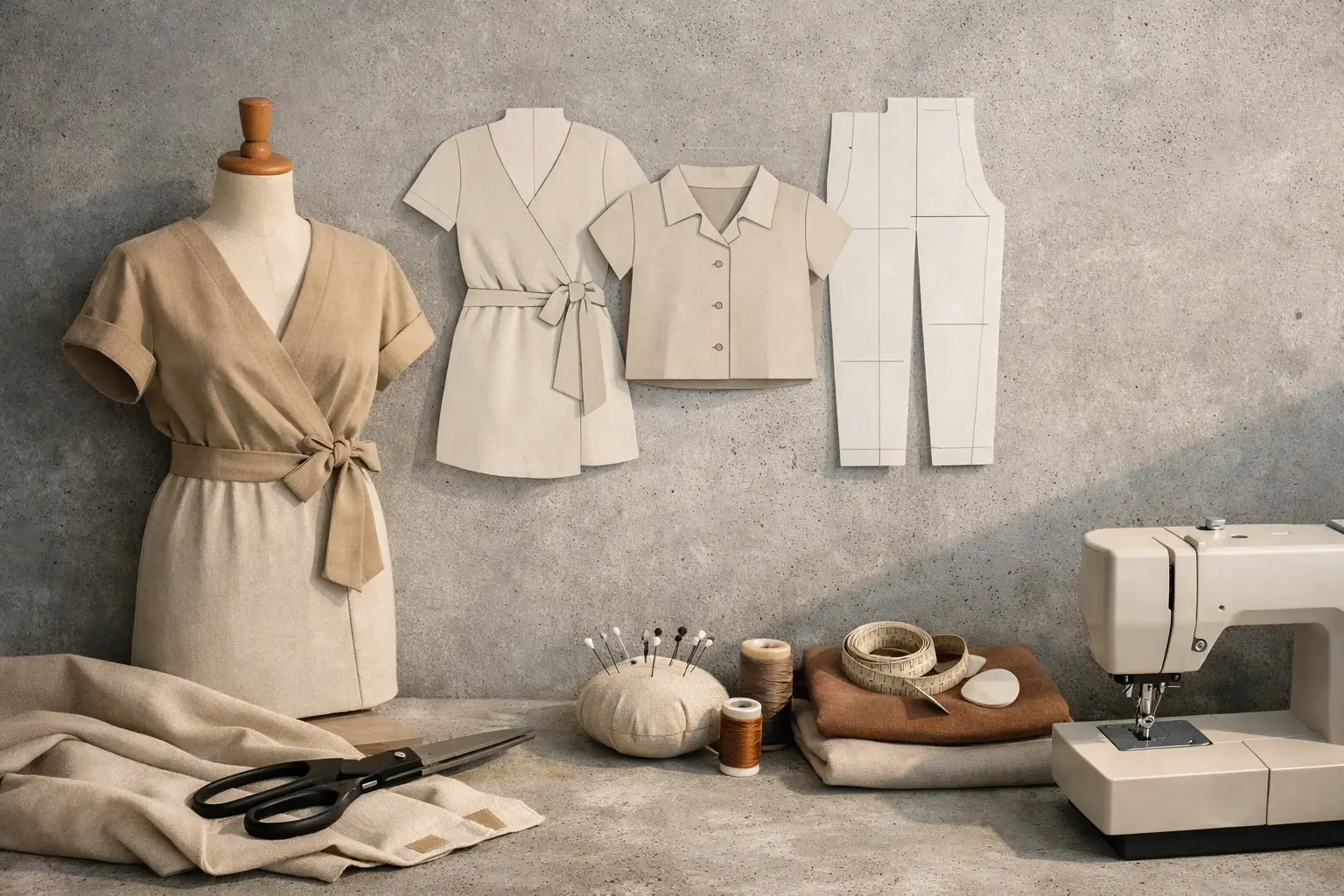
Choosing your first clothing sewing pattern shouldn’t feel overwhelming.
The best beginner sewing patterns clothes aren’t necessarily the simplest—they’re the ones that help you finish a project successfully while creating something you’ll genuinely enjoy wearing.
A great beginner pattern combines:
- simple construction
- clear instructions
- modern styling
- forgiving fit
When those four things come together, sewing becomes enjoyable instead of intimidating.
If you’re looking for your very first garment, start with a project that builds confidence rather than tests every sewing skill at once.
What makes a clothing sewing pattern beginner-friendly?
Not every pattern labelled “easy” is actually easy for someone who’s never sewn clothing before.
A beginner-friendly sewing pattern should have:
- relaxed silhouettes
- minimal fitting
- simple construction
- beginner-friendly fabric recommendations
- detailed step-by-step instructions
Patterns with oversized or relaxed fits are often much more forgiving than fitted garments because small sewing imperfections are far less noticeable.
If you’re still deciding what makes a good beginner PDF pattern, our guide How to Choose a Beginner Sewing Patterns PDF explains exactly what to look for before buying your first pattern.
Start with clothes you’ll actually wear
One of the biggest mistakes beginners make is treating their first project as “practice.”
Instead, choose something you’d happily wear next weekend.
Modern sewing doesn’t have to mean complicated tailoring.
Simple contemporary clothing often looks more stylish than highly detailed garments.
Projects like:
- relaxed tops
- oversized shirts
- simple skirts
- comfortable separates
are ideal because they combine wearable style with beginner-friendly construction.
Best beginner clothing pattern: a relaxed top
If you’re sewing your first garment, a relaxed top is one of the smartest places to begin.
A project like the Drawstring Ruched Back Top introduces garment construction without requiring difficult fitting techniques.
You’ll learn:
- sewing straight seams
- finishing edges
- assembling garments
- pressing correctly
while creating a top that works beautifully with jeans, shorts, skirts, or linen trousers.
It’s exactly the kind of project that builds confidence because the finished garment looks modern rather than homemade.
If you’d like to learn more about relaxed silhouettes before choosing a pattern, read our guide Best Sewing Patterns for Boxy Tops.
Skirts are another perfect beginner project
Skirts are often easier than many beginners expect.
Without complicated fitting around sleeves or collars, they allow you to focus on construction while creating something you’ll wear all season.
The Balloon Skirt is an excellent first skirt because the relaxed silhouette is forgiving and comfortable while teaching useful techniques like gathering and elastic waist construction.
If you love contemporary silhouettes, the Knee-Length Bubble Skirt is another fantastic choice.
Its sculptural shape looks modern while remaining surprisingly approachable for beginners.
Don’t overlook beginner bag patterns
Clothing isn’t the only way to improve your sewing.
Many sewists build confidence by alternating garments with accessories.
A simple bag teaches:
- accurate seam allowances
- topstitching
- working with thicker fabrics
- finishing neatly
If you’re looking for your next beginner project, our article How to Sew a Simple Crossbody Bag is a great place to start.
When you’re ready for something slightly more advanced, the Modern Geometric Backpack introduces practical construction techniques while creating an everyday accessory you’ll actually use.
Choose beginner-friendly fabric
Even the best sewing pattern can become frustrating if you choose difficult fabric.
Stable woven fabrics such as:
- cotton poplin
- chambray
- linen blends
- washed linen
are usually much easier to sew than slippery rayon or stretchy knits.
If you’re unsure how fabric affects oversized clothing, our guide What Fabric Suits Oversized Garments Best? explains how drape, weight and structure completely change the final result.
Why modern PDF sewing patterns make learning easier
Today’s PDF sewing patterns are designed differently from many traditional commercial patterns.
Instead of expecting you to understand sewing terminology immediately, modern digital patterns often include:
- illustrated instructions
- layered PDF files
- A4, Letter and A0 formats
- projector files
- beginner-friendly layouts
If you’re wondering whether digital patterns are worth trying, read Why Modern PDF Sewing Patterns Work.
Build skills one project at a time
Trying to learn every sewing technique in your first project rarely ends well.
A much better approach is gradual progress.
For example:
Your first project might teach you basic garment construction.
Your second introduces gathering.
Your third adds sleeves.
Your fourth explores bags or accessories.
That’s exactly how confident sewists are built.
If you’re looking for ideas, you’ll also enjoy:
- 12 Best Beginner Sewing Patterns to Try
- 10 Best Beginner Clothing Patterns to Sew
- 9 Beginner Sewing Projects Clothes You’ll Wear
- 12 Beginner Sewing Projects for Adults
Each guide recommends approachable projects that gradually increase your sewing skills without becoming overwhelming.
Don’t worry about perfection
Your first handmade garment won’t be perfect.
It doesn’t need to be.
The goal isn’t creating a flawless wardrobe on day one.
The goal is finishing one project, learning something new, and feeling excited to start another.
Whether that’s a relaxed Drawstring Ruched Back Top, a comfortable Balloon Skirt, a sculptural Bubble Skirt, or even a practical backpack, every completed project moves you one step closer to sewing with confidence.
Choose patterns designed for beginners.
Choose fabrics that are easy to handle.
And most importantly, choose clothes you’ll actually love wearing.
Because the best beginner sewing pattern isn’t the easiest one.
It’s the one that makes you excited to sew again tomorrow.
Leave a Reply
You must be logged in to post a comment.