
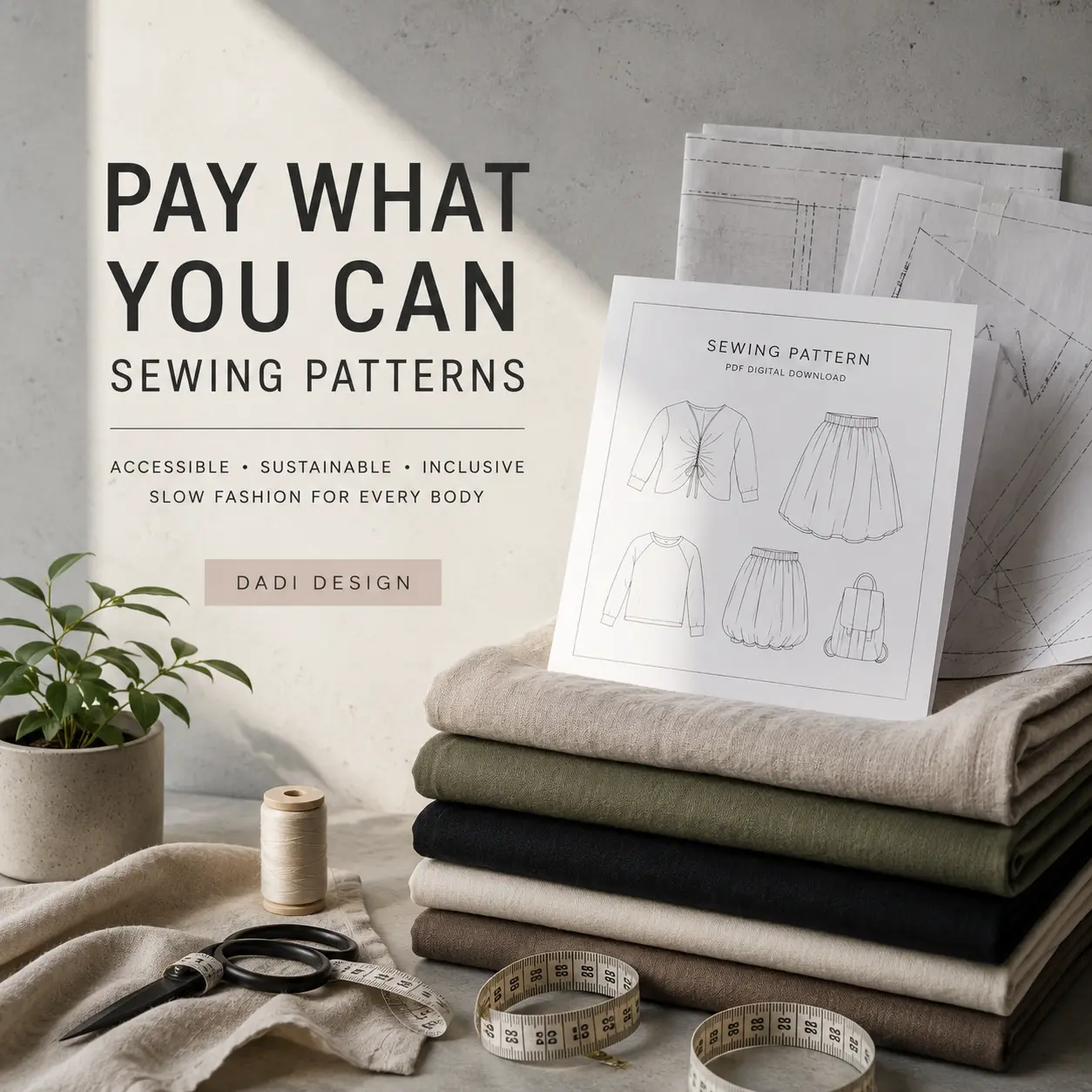
The world of independent sewing is experiencing a powerful renaissance. More people than ever are returning to garment making as a way to create unique clothing, reduce waste, and reconnect with a slower, more intentional approach to fashion.
However, there is one challenge that many new and experienced sewists face: the rising cost of sewing as a hobby.
Between premium fabrics, sewing tools, machine maintenance, threads, zippers, buttons, and digital pattern purchases, creating a handmade wardrobe can quickly become expensive. Many independent PDF sewing patterns now cost between $15 and $22, which can make sewing feel inaccessible for students, beginners, hobbyists, and makers working with limited budgets.
This is where pay what you can sewing patterns are changing the future of independent sewing.
Instead of using a fixed price model, pay what you can sewing patterns allow makers to choose a contribution that fits their current financial situation. Whether someone can contribute a smaller amount while learning or pay more to directly support an independent designer, this approach creates a more inclusive and sustainable sewing community.
At DADI DESIGN, this model represents a simple belief:
Beautiful, professionally drafted sewing patterns should be available to every maker, regardless of their budget.
What Are Pay What You Can Sewing Patterns?
Pay what you can sewing patterns are digital sewing patterns offered with flexible pricing instead of a traditional fixed purchase price.
The customer chooses the amount they would like to contribute based on their circumstances, while the designer continues receiving support from the sewing community.
Unlike free sewing patterns or low-quality downloads, a pay what you can model can still include everything expected from a professional independent sewing pattern:
- professionally drafted pattern pieces
- multiple graded sizes
- nested size layers
- detailed sewing instructions
- printable PDF files
- A0 copy shop format
- projector-friendly files
- construction tips
- beginner-friendly explanations
The difference is not the quality of the pattern.
The difference is the way the sewing community supports the designer.
This model creates a relationship based on trust rather than a fixed transaction.
Why Pay What You Can Sewing Patterns Matter for Slow Fashion
Slow fashion is built on several important ideas:
- buying fewer but better garments
- understanding how clothing is made
- repairing and modifying existing pieces
- valuing craftsmanship
- creating garments that last
Home sewing naturally aligns with these principles. However, when sewing patterns become too expensive, many people are excluded from participating in this movement.
A beginner who wants to learn dressmaking should not have to spend a significant amount of money before even making their first stitch.
The purpose of sewing is creativity, independence, and exploration—not financial pressure.
Pay what you can sewing patterns remove one of the biggest barriers beginners experience: the fear of wasting money while learning.
When the initial investment is lower, makers feel more comfortable experimenting, making mistakes, adjusting fits, and developing their skills.
That freedom is essential because sewing is learned through practice.
Making Sewing More Accessible for Every Body
One of the most important benefits of flexible pricing is that it supports a wider and more diverse sewing community.
Not every maker has the same financial circumstances.
Some sewists are:
- students learning new creative skills
- parents creating clothing on a household budget
- beginners exploring sewing for the first time
- artists building sustainable wardrobes
- experienced makers supporting independent designers
A fixed-price pattern treats every customer exactly the same.
A pay what you can sewing pattern recognizes that every maker has a different situation.
This creates a more welcoming environment where creativity is not limited by income.
How the Pay What You Can Pricing Model Works
A flexible pricing structure allows customers to choose the level of support that feels appropriate.
A typical pay what you can sewing patterns system includes three contribution levels:
Accessible Tier (€3 – €5)
This option keeps sewing patterns available for everyone.
It helps cover essential digital costs such as:
- website hosting
- payment processing
- file delivery systems
- customer support platforms
This level allows beginners, students, and budget-conscious makers to start sewing without a large financial commitment.
Sustainable Tier (€6 – €10)
This contribution level reflects the true value behind independent pattern development.
Creating a professional sewing pattern requires many hours of work, including:
- initial drafting
- pattern refinement
- digital grading
- sewing samples
- fit testing
- instruction writing
- photography preparation
- customer support
Choosing this tier directly supports the designer’s ability to continue creating new sewing patterns.
Supporter Tier (€11+)
For makers who are able to contribute more, the supporter tier helps strengthen the entire sewing community.
Additional contributions allow independent designers to:
- develop new patterns
- improve existing instructions
- expand size ranges
- create more inclusive designs
- keep flexible pricing available
This transforms purchasing a sewing pattern into an investment in the future of independent slow fashion.
Why Digital PDF Sewing Patterns Make This Model Possible
The growth of PDF sewing patterns has completely transformed independent pattern design.
Traditional paper patterns require:
- printing
- physical packaging
- inventory storage
- shipping materials
- international delivery
Digital sewing patterns eliminate many of these limitations.
A PDF pattern can be created once and delivered instantly to customers anywhere in the world.
Whether a designer works from a small studio in Europe, a home sewing room in North America, or a creative workspace in Asia, digital distribution makes global access possible.
This lower production cost creates the perfect foundation for flexible pricing models.
Instead of savings disappearing inside traditional production systems, digital efficiency allows designers to share patterns with a wider audience.
That is why pay what you can sewing patterns are becoming an important part of the modern sewing movement.
Choosing Your First Pay What You Can Sewing Pattern
For beginners, choosing the right sewing pattern is one of the most important steps toward a successful project.
A good beginner pattern should provide:
- clear instructions
- simple construction techniques
- realistic skill requirements
- accurate sizing information
- beginner-friendly fabric recommendations
Before starting your first project, explore resources such as:
- How to Sew for Beginners Without Stress
- How to Choose a Beginner Sewing Pattern PDF
- 12 Best Beginner Sewing Projects for Adults
These guides help new makers choose projects that match their current skill level and avoid unnecessary frustration.
The goal of sewing is not perfection.
The goal is learning, creating, and enjoying the process.
Explore the DADI DESIGN Pay What You Can Sewing Patterns Collection
The best sewing patterns do more than create clothing — they help makers develop confidence, creativity, and independence.
The DADI DESIGN collection of pay what you can sewing patterns combines minimalist aesthetics, practical construction techniques, and modern garment design to make slow fashion more accessible.
Each PDF sewing pattern is created with thoughtful drafting, clear instructions, and wearable designs that fit into a contemporary handmade wardrobe.
Whether you are sewing your first garment or expanding your handmade capsule wardrobe, these patterns are designed to help you learn new skills while creating pieces you will actually wear.
The collection focuses on:
- minimalist silhouettes
- comfortable everyday clothing
- beginner-friendly construction
- timeless wardrobe design
- sustainable sewing practices
Choose the contribution level that works for you and start creating your own handmade wardrobe.
1. Drawstring Ruched Back Top PDF Sewing Pattern
Adjustable Minimalist Top With a Unique Ruched Back Detail
The Drawstring Ruched Back Top PDF Sewing Pattern is designed for makers who want to create a modern handmade garment with an adjustable fit and an architectural design element.
Unlike traditional basic tops, this pattern introduces movement and flexibility through a functional gathered back detail. The adjustable drawstring allows the wearer to customize the silhouette while creating beautiful natural gathers across the back.
This makes it an ideal example of how pay what you can sewing patterns can combine accessibility with thoughtful independent design.
Pattern Highlights
Skill level: Beginner to confident beginner
Best for: Makers creating their first handmade top
Style: Minimalist, adjustable, modern
Recommended fabrics:
- linen
- cotton lawn
- lightweight cotton
- Tencel
- rayon blends
Skills You Will Learn
This sewing pattern helps you develop essential garment-making techniques:
- creating narrow fabric drawstring channels
- sewing precise casing details
- controlling fabric gathers
- finishing clean hems
- understanding adjustable garment construction
The adjustable back design also makes this pattern forgiving for different body shapes, making it a comfortable addition to a handmade capsule wardrobe.
For more inspiration, explore related minimalist silhouettes in:
Best Sewing Patterns for Boxy Tops
2. Balloon Skirt PDF Sewing Pattern
A Modern Voluminous Skirt Inspired by Architectural Fashion
The Balloon Skirt PDF Sewing Pattern transforms simple fabric into a dramatic yet wearable statement piece.
Instead of relying on complicated tailoring techniques, this design creates volume through clever construction and an internal shaping system that pulls the hem inward, creating the signature balloon silhouette.
This pattern demonstrates how beginner-friendly sewing can still produce garments with a high-fashion aesthetic.
Pattern Highlights
Skill level: Beginner / confident beginner
Best for: Makers interested in modern silhouettes
Style: Architectural, oversized, contemporary
Recommended fabrics:
- structured linen
- cotton canvas
- denim
- crisp poplin
- medium-weight woven fabrics
Skills You Will Learn
The Balloon Skirt teaches:
- managing fabric volume
- working with gathered sections
- creating structured silhouettes
- inserting comfortable waistbands
- adding practical side pockets
The pattern is especially suitable for sewists who want to explore slow fashion while creating unique clothing that cannot be found in traditional stores.
For more beginner-friendly garment ideas, explore:
Best Beginner Sewing Patterns Clothes
3. Knee-Length Bubble Skirt Sewing Pattern PDF
Everyday Comfort Meets Playful Minimalist Design
The Knee-Length Bubble Skirt Sewing Pattern PDF brings the volume and creativity of the balloon silhouette into a more casual everyday wardrobe piece.
Its shorter length makes it easy to style for daily wear while maintaining the distinctive curved shape that makes bubble skirts unique.
This pattern is perfect for makers who want something different from standard skirts but still want a comfortable, wearable garment.
Pattern Highlights
Skill level: Beginner
Best for: Everyday handmade wardrobes
Style: Playful, relaxed, comfortable
Recommended fabrics:
- linen blends
- cotton poplin
- chambray
- lightweight woven fabrics
Skills You Will Learn
This pattern helps you practice:
- attaching layered skirt sections
- balancing outer and inner fabric lengths
- creating neat elastic waistbands
- finishing curved hems
- controlling garment volume
The Bubble Skirt works beautifully with simple handmade tops, oversized shirts, and relaxed knit garments.
If you are building your first handmade wardrobe, explore:
12 Best Beginner Sewing Patterns to Try
and
12 Beginner Sewing Projects for Adults
4. Raglan Shirt PDF Sewing Pattern
The Perfect Beginner-Friendly Knit Shirt Pattern
Every sustainable capsule wardrobe needs a comfortable everyday shirt.
The Raglan Shirt PDF Sewing Pattern removes one of the most intimidating parts of beginner garment sewing: attaching a traditional curved sleeve.
The raglan construction creates a continuous diagonal line from the neckline to the underarm, making assembly easier while producing a relaxed modern silhouette.
This makes it one of the most approachable pay what you can sewing patterns for beginners who want to start working with knit fabrics.
Pattern Highlights
Skill level: Beginner
Best for: First knit garment project
Style: Relaxed, comfortable, minimalist
Recommended fabrics:
- cotton jersey
- bamboo knit
- modal
- French terry
- organic cotton stretch knit
Skills You Will Learn
The Raglan Shirt teaches:
- sewing stretch fabrics
- working with knit recovery
- attaching neckbands
- using stretch stitches
- creating comfortable everyday garments
You do not need an industrial machine or serger to make this pattern successfully.
A regular sewing machine with the correct stitch settings can create beautiful results.
For fabric guidance, explore:
What Fabric Suits Oversized Garments Best?
The Raglan Shirt is also featured among essential beginner garment projects:
9 Beginner Sewing Projects Clothes You’ll Wear
and
10 Best Beginner Clothing Patterns to Sew
5. Origami Slim Backpack PDF Sewing Pattern (Fits 15″ Laptop)
A Minimalist Geometric Backpack Inspired by Japanese Origami
The Origami Slim Backpack PDF Sewing Pattern brings accessory design into the world of modern slow fashion.
Inspired by origami folding techniques, this backpack uses clever construction methods to create clean geometric lines, practical storage, and a slim urban profile.
Designed to fit a 15-inch laptop, this pattern combines creativity with everyday functionality.
It is the perfect project for makers who want to move beyond clothing and explore structured accessories.
Pattern Highlights
Skill level: Confident beginner
Best for: Makers interested in bags and accessories
Style: Minimalist, geometric, functional
Recommended fabrics:
- canvas
- heavy denim
- duck cloth
- Cordura
- durable woven fabrics
Skills You Will Learn
This pattern introduces advanced beginner techniques:
- sewing multiple fabric layers
- applying interfacing
- installing zippers
- creating reinforced straps
- building structured accessories
The Origami Slim Backpack proves that handmade fashion is not limited to clothing. Bags, accessories, and everyday objects can also become expressions of personal style.
Before starting this project, beginners may enjoy practicing simpler construction techniques with:
How to Make a Boxed Pouch That Looks Neat
Then progress toward larger accessories through:
How to Sew a Simple Crossbody Bag
and explore more advanced shapes with:
Why These DADI DESIGN Patterns Fit the Pay What You Can Sewing Patterns Movement
Each pattern in the DADI DESIGN collection represents a different part of modern handmade living:
| Pattern | Category | Main Skill | Style |
|---|---|---|---|
| Drawstring Ruched Back Top | Clothing | Adjustable construction | Minimal & fluid |
| Balloon Skirt | Clothing | Volume shaping | Architectural |
| Bubble Skirt | Clothing | Layered construction | Playful |
| Raglan Shirt | Knitwear | Stretch sewing | Everyday comfort |
| Origami Slim Backpack | Accessories | Structured sewing | Geometric utility |
Together, these designs create a foundation for a handmade wardrobe that values:
- creativity over consumption
- quality over quantity
- personal expression over trends
- accessibility over exclusivity
How to Choose the Right Pay What You Can Sewing Pattern
Choosing your first pay what you can sewing pattern should feel exciting, not stressful.
Many beginners believe that a successful sewing project depends only on technical ability. In reality, choosing the right pattern, fabric, and difficulty level has an even bigger impact on your final result.
A well-designed sewing pattern should help you learn gradually while creating something you genuinely want to wear or use.
Before purchasing or downloading a PDF sewing pattern, consider these important factors:
1. Choose a Pattern That Matches Your Skill Level
Every sewing project teaches new techniques, but choosing a project that is too advanced can quickly become frustrating.
For beginners, ideal first projects usually include:
- simple garment shapes
- minimal closures
- clear construction steps
- forgiving silhouettes
- comfortable fabrics
Excellent beginner choices include:
- relaxed tops
- elastic-waist skirts
- simple bags
- oversized shirts
- easy layering pieces
The goal is not only finishing one project.
The goal is building confidence for the next one.
Understanding PDF Sewing Patterns
Modern digital sewing patterns have transformed the independent sewing industry.
Unlike traditional paper patterns, PDF sewing patterns allow instant access without:
- waiting for shipping
- paying international delivery fees
- storing physical envelopes
- purchasing replacement copies
A professional PDF sewing pattern usually includes several file options:
Print-at-Home PDF
Designed for standard home printers.
Common formats include:
- A4
- US Letter
The pattern is divided into pages that are printed, trimmed, and assembled.
A0 Copy Shop File
This large-format version allows you to print the entire pattern at a professional copy shop.
It is especially useful for:
- larger projects
- multiple sizes
- sewists who want to save assembly time
Projector File
Digital projection has become increasingly popular among experienced sewists.
A projector file allows makers to display the pattern directly onto fabric, reducing:
- paper waste
- printing costs
- preparation time
This makes PDF sewing patterns an excellent match for sustainable sewing practices.
How to Print a PDF Sewing Pattern Correctly
One of the most common beginner mistakes is incorrect printing scale.
Before printing the entire pattern:
- Print only the first page.
- Locate the test square.
- Measure the square using a ruler.
- Confirm that it matches the stated measurement.
- Select Actual Size / 100% Scale in printer settings.
Never use:
- Fit to Page
- Shrink to Fit
- Automatic Scaling
Even a small printing adjustment can change the final garment measurements.
Fabric Selection Secrets for Minimalist Sewing Patterns
Fabric choice can completely transform the final appearance of a handmade garment.
Minimalist designs depend heavily on:
- texture
- weight
- structure
- movement
- drape
Because there are fewer decorative details, the fabric becomes one of the most important design elements.
Choosing Woven Fabrics
For structured patterns such as the:
- Balloon Skirt
- Bubble Skirt
- Origami Slim Backpack
choose fabrics with enough body and stability.
Recommended options:
Crisp and Structured Look
Choose:
- linen canvas
- cotton canvas
- denim
- duck cloth
These fabrics create:
- sharper silhouettes
- stronger shapes
- architectural details
Soft and Fluid Look
Choose:
- Tencel twill
- washed linen
- viscose linen blends
- modal blends
These fabrics create:
- softer movement
- relaxed drape
- comfortable everyday wear
Choosing Knit Fabrics for the Raglan Shirt
When sewing knit garments, fabric recovery is often more important than weight.
A fabric with poor recovery may:
- stretch out during wear
- lose neckline shape
- create uneven hems
Look for fabrics such as:
- 95% organic cotton + 5% elastane
- bamboo stretch jersey
- quality French terry
- modal jersey
Always check the stretch requirement included in your sewing pattern instructions.
Understanding Sewing Pattern Sizes
One of the biggest differences between indie sewing patterns and ready-to-wear clothing is sizing.
Commercial clothing sizes are often based on brand standards.
Independent sewing patterns are based on actual body measurements.
Do not choose your size based on the number you usually buy in stores.
Instead, measure your body and compare your measurements with the pattern size chart.
The Three Most Important Body Measurements
Full Bust
Measure around the fullest part of your chest.
Keep the measuring tape:
- parallel to the floor
- comfortably placed
- not pulled tightly
If your full bust differs significantly from your upper bust measurement, you may benefit from a Full Bust Adjustment (FBA).
Natural Waist
Find your natural waist by:
- placing elastic around your torso
- bending slightly from side to side
- allowing the elastic to settle naturally
This creates a more accurate measurement than guessing.
Full Hip
Measure around the widest part of:
- hips
- seat
- pelvic area
This measurement is especially important for:
- skirts
- trousers
- fitted garments
Finished Garment Measurements Are Essential
Never rely only on the body measurement chart.
Always check the:
Finished Garment Measurements
This tells you how much ease is included.
For example:
A relaxed oversized shirt may have:
- 20 cm of positive ease
- dropped shoulders
- wider body measurements
This does not mean you should automatically size down.
The intended silhouette is part of the design.
Frequently Asked Questions About Pay What You Can Sewing Patterns
Are pay what you can sewing patterns free?
Not necessarily.
Pay what you can sewing patterns use flexible pricing instead of a fixed price.
Some makers choose the minimum contribution, while others pay more to support independent designers and future pattern development.
Are pay what you can PDF sewing patterns professional quality?
Yes.
Flexible pricing does not mean reduced quality.
Professional pay what you can sewing patterns can include:
- detailed instructions
- graded sizes
- printable files
- projector formats
- tested construction methods
- beginner-friendly explanations
The pricing model changes accessibility, not craftsmanship.
How much should I pay for a sewing pattern?
There is no single correct amount.
Many makers choose based on:
- their current budget
- how much value they receive
- their desire to support independent designers
A smaller contribution helps keep sewing accessible.
A larger contribution helps designers continue creating new patterns.
Both choices support the sewing community.
Why do independent designers offer pay what you can sewing patterns?
Independent designers understand that creativity grows when more people can participate.
This model allows designers to:
- reach new makers
- support beginners
- build stronger communities
- continue developing new designs
It creates a relationship based on trust and shared values.
Are PDF sewing patterns better than paper patterns?
Both formats have advantages.
PDF sewing patterns provide:
- instant access
- unlimited reprinting
- worldwide availability
- lower environmental impact
- easier size selection
For modern sewists, PDF patterns provide unmatched flexibility.
Build Your Handmade Wardrobe With DADI DESIGN
Creating your own clothing should be an empowering experience.
Sewing allows you to:
- understand how garments are created
- choose fabrics you love
- create better-fitting clothing
- reduce dependence on fast fashion
- develop valuable creative skills
The future of slow fashion is not about making sewing exclusive.
It is about making creativity available to everyone.
The DADI DESIGN collection of pay what you can sewing patterns brings together modern minimalist design, beginner-friendly construction, and flexible pricing to support a more inclusive sewing community.
Whether you are creating your first handmade top, building a capsule wardrobe, or exploring structured accessories, there is a pattern waiting for your next project.
Choose the contribution level that works for you.
Start sewing.
Create something meaningful.
Build a wardrobe that tells your story.
Leave a Reply
You must be logged in to post a comment.