
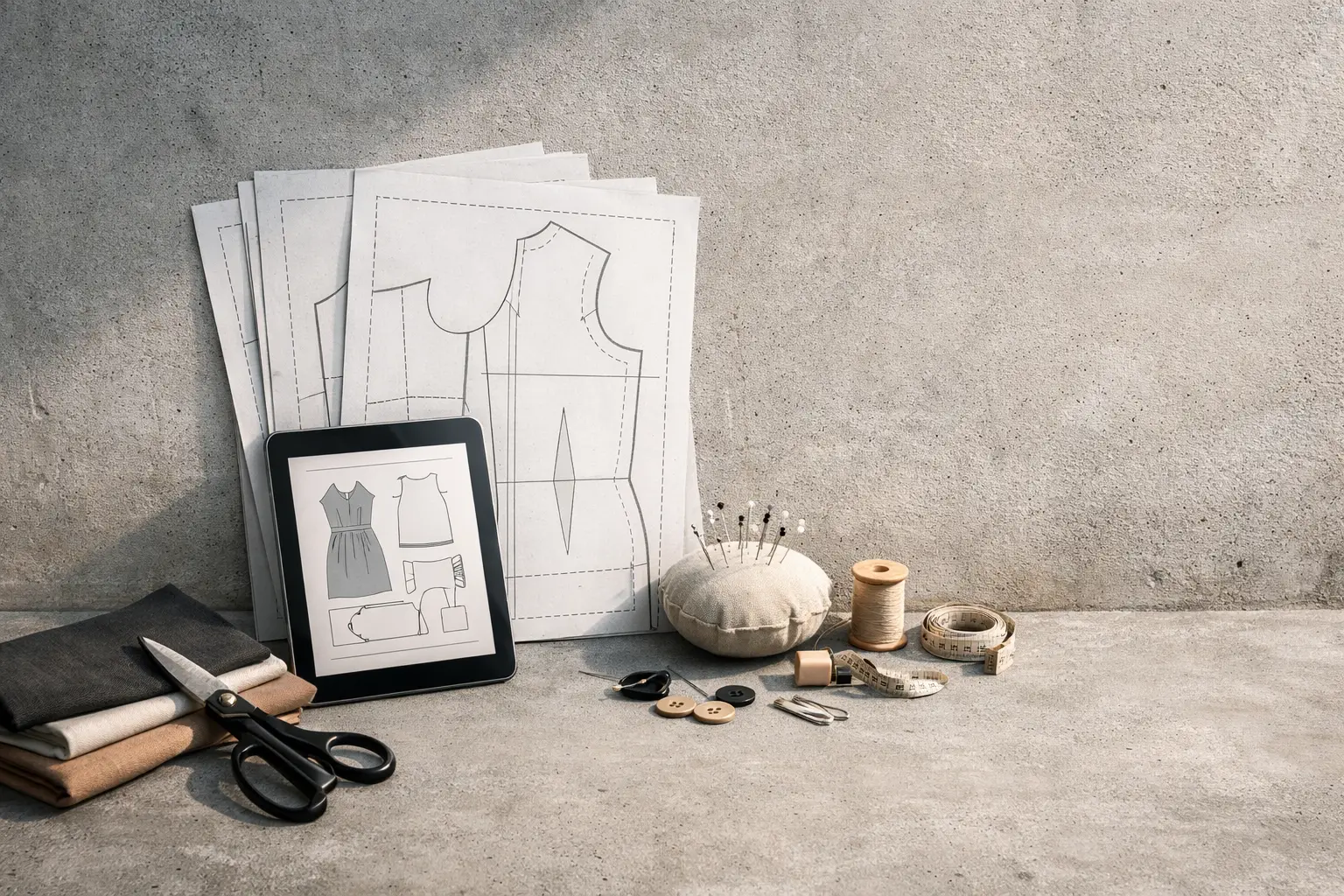
Finding your first sewing pattern can feel harder than learning to sew itself. There are thousands of PDF sewing patterns available, all claiming to be “beginner-friendly.” But not every pattern that looks simple actually is.
The best beginner sewing patterns PDF combine three things:
- clear instructions
- modern, wearable designs
- a sewing process that builds confidence instead of frustration.
If your first project feels achievable, you’re far more likely to finish it—and that’s what helps you improve.
What makes a beginner sewing patterns PDF truly beginner-friendly?
A beginner sewing pattern isn’t simply an easy garment.
It’s a pattern that guides you through every step without assuming years of sewing experience.
Look for patterns that offer:
- simple construction
- relaxed silhouettes
- illustrated instructions
- multiple PDF formats
- beginner-friendly fabric recommendations
Projects with loose fits are usually much more forgiving than fitted garments.
For example, the Drawstring Ruched Back Top is an excellent first clothing project because the relaxed silhouette allows you to focus on sewing techniques rather than perfect garment fitting.
If you’re unsure whether PDF patterns are right for you, you’ll also find our guide Why Modern PDF Sewing Patterns Work helpful before choosing your first project.
Why PDF sewing patterns are ideal for beginners
PDF sewing patterns remove many of the frustrations that traditional paper patterns create.
Instead of waiting for shipping, you can:
- download instantly
- print only the size you need
- reprint damaged pages
- choose A4, Letter, A0 or Projector files
That flexibility makes learning much less stressful.
If you’re still deciding between paper and digital patterns, our guide on PDF Patterns vs Tissue Patterns explains the advantages of each format.
Start with projects you’ll actually wear
One of the biggest beginner mistakes is choosing something that’s technically possible but emotionally overwhelming.
A fitted blazer might look beautiful.
A relaxed top is much more likely to become your first finished garment.
Modern beginner sewing is all about wearable basics.
Projects like:
- oversized tops
- relaxed skirts
- everyday bags
- comfortable separates
teach valuable skills while creating clothes you’ll genuinely enjoy wearing.
The Balloon Skirt is another excellent beginner project because its relaxed volume makes fitting much easier than traditional skirts.
→ Internal link: Balloon Skirt PDF Sewing Pattern
If you love contemporary silhouettes, the Knee-Length Bubble Skirt is another great option once you’ve completed your first garment.
Don’t underestimate accessories
Many beginners assume clothing should come first.
That’s not always true.
Simple accessories teach many of the same sewing techniques without worrying about fit.
If you’d like a practical first project, our guide How to Sew a Simple Crossbody Bag walks through what makes bag sewing beginner-friendly.
Once you’re comfortable with basic construction, the Modern Geometric Backpack is a natural next project that introduces straps, topstitching and heavier fabrics.
You can also practice precision sewing with our tutorial How to Make a Boxed Pouch That Looks Neat before moving on to larger projects.
How to know if a sewing pattern will frustrate you
Before downloading any PDF sewing pattern, ask yourself a few questions.
Does it include:
- A4 and Letter files?
- A0 copy shop files?
- Projector files?
- layered sizing?
- illustrated instructions?
- finished garment measurements?
These features don’t make a pattern more advanced.
They make it easier to follow.
If you’re new to sewing, avoiding unnecessary complexity is often the fastest way to improve.
Choose beginner-friendly fabrics too
Even the best sewing pattern can become frustrating if paired with difficult fabric.
Stable woven fabrics like:
- cotton poplin
- washed linen
- linen blends
- chambray
are usually much easier to handle than slippery rayon or stretchy knits.
If you’re unsure which fabric suits relaxed clothing, read our guide:
What Fabric Suits Oversized Garments Best?
It explains how drape, weight and fabric structure completely change the final look of a garment.
Focus on finishing, not perfection
Your first sewing project doesn’t need to impress anyone.
It only needs to get finished.
Every completed project teaches something valuable.
If you’re looking for inspiration, our collections of beginner-friendly projects are a great next step:
- 12 Best Beginner Sewing Patterns to Try
- 10 Best Beginner Clothing Patterns to Sew
- 9 Beginner Sewing Projects Clothes You’ll Wear
- 12 Beginner Sewing Projects for Adults
- Best Beginner Sewing Patterns Clothes
These guides will help you build your handmade wardrobe one project at a time instead of jumping into garments that feel overwhelming.
Build confidence one project at a time
Choosing your first beginner sewing patterns PDF isn’t about finding the easiest design.
It’s about finding the right balance between learning and enjoyment.
Start with relaxed silhouettes.
Choose beginner-friendly fabrics.
Use modern PDF patterns with clear instructions.
And most importantly, choose projects you’ll actually want to wear.
Whether that’s a relaxed Drawstring Ruched Back Top, a comfortable Balloon Skirt, a sculptural Bubble Skirt, or even a practical backpack, every finished project builds confidence for the next one.
The goal isn’t to become an expert overnight.
It’s to enjoy sewing enough that you can’t wait to start your next project.
Leave a Reply
You must be logged in to post a comment.