
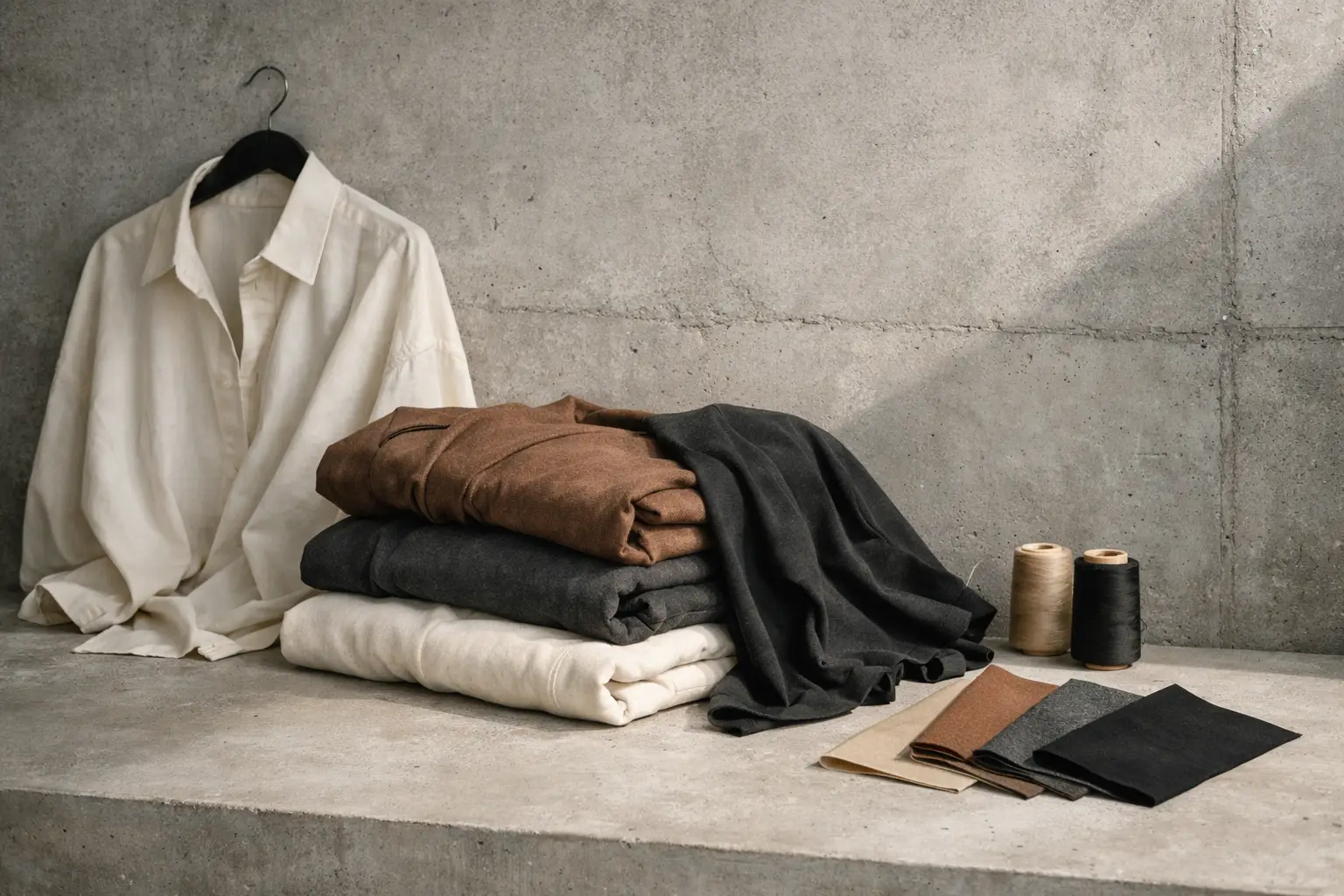
Oversized clothes can look effortlessly stylish on the hanger but completely different once they’re sewn. That’s why choosing the right fabric is just as important as choosing the right sewing pattern.
Oversized garments rely on fabric more than fitted clothing does. The fabric creates the shape, controls the drape, and determines whether your finished garment looks modern and intentional—or simply too big.
The good news is that oversized sewing is one of the easiest places for beginners to start. Relaxed silhouettes are forgiving, comfortable, and ideal for building confidence, especially when paired with the right fabric.
Fabric changes the entire look of an oversized garment
There isn’t one perfect fabric for every oversized sewing project.
Instead, ask yourself one simple question:
How do I want this garment to behave?
Do you want it to:
- flow softly?
- hold its shape?
- sit somewhere in between?
Once you answer that question, choosing fabric becomes much easier.
For example, a relaxed oversized top made from washed linen feels completely different from the same pattern sewn in crisp cotton poplin.
The sewing pattern stays the same.
The fabric completely changes the finished look.
Understand these three fabric qualities first
Many beginners choose fabric based only on fiber content.
Cotton.
Linen.
Rayon.
But fiber alone doesn’t tell you how a fabric behaves.
Instead, focus on three characteristics.
Drape
Drape describes how fabric hangs.
Soft drape creates flowing garments.
Firm drape creates cleaner, more architectural silhouettes.
Weight
Weight affects comfort and construction.
Very lightweight fabric can be difficult to control.
Very heavy fabric may add unnecessary bulk to oversized garments.
Midweight fabrics are often the easiest place to start.
Body
Body refers to how much structure a fabric naturally has.
More body creates crisp oversized shapes.
Less body creates relaxed movement.
Once you start thinking about drape, weight, and body instead of simply “cotton” or “linen,” fabric shopping becomes much easier.
Best fabrics for oversized tops
Oversized tops are one of the most beginner-friendly garments you can sew because they don’t rely on close fitting.
The fabric simply changes the personality of the design.
For a soft, relaxed look, choose:
- washed linen
- linen blends
- rayon blends
- Tencel
- double gauze
If you prefer a cleaner, more structured silhouette, try:
- cotton poplin
- cotton lawn
- chambray
These fabrics pair beautifully with simple modern patterns like the Drawstring Ruched Back Top, where the relaxed fit allows the fabric itself to become part of the design.
Best fabrics for oversized skirts
Oversized skirts need a balance between structure and movement.
Too much drape and the silhouette can collapse.
Too much stiffness and the skirt may feel bulky.
For relaxed balloon or bubble silhouettes, fabrics such as:
- cotton poplin
- linen blends
- lightweight cotton twill
- washed linen
often create the best balance.
They’re also forgiving to sew, making them excellent choices for beginners.
Patterns like the Balloon Skirt are designed to showcase this kind of fabric beautifully, while a Knee-Length Bubble Skirt creates more sculptural volume with slightly crisper fabrics.
Structured oversized garments
Some oversized garments are supposed to keep their shape.
Think:
- overshirts
- lightweight jackets
- utility-inspired garments
- structured bags
For these projects, fabrics with more body work best.
Excellent options include:
- cotton twill
- canvas
- denim
- heavier linen blends
These fabrics help oversized garments look intentional rather than shapeless.
Just remember that heavier fabrics create bulk around collars, pockets, and seams, so beginners may want to choose medium-weight versions first.
The easiest beginner fabrics
If this is your first oversized sewing project, stable woven fabrics will make the experience much more enjoyable.
Some of the easiest fabrics include:
- cotton poplin
- chambray
- washed linen
- cotton twill
- linen-cotton blends
These fabrics:
- cut cleanly
- stay flat
- press beautifully
- sew accurately
That combination helps your finished garment look far more professional.
Oversized accessories count too
Oversized style isn’t limited to clothing.
Structured bags are another excellent way to experiment with fabric behaviour.
A project like the Modern Geometric Backpack lets you experience how canvas, denim, or heavier cottons create shape while introducing useful techniques like topstitching and strap construction.
It’s a practical beginner project that also builds confidence before moving on to larger garments.
Common fabric mistakes
One of the biggest beginner mistakes is choosing fabric based only on colour or print.
Instead, think about behaviour.
Ask yourself:
- Will this fabric hold its shape?
- Will it drape too much?
- Is it easy to sew?
Another common mistake is assuming oversized garments require thick fabric.
They usually don’t.
Oversized simply means relaxed.
The fabric still needs to suit the design.
How to choose fabric with confidence
Whenever you’re unsure, imagine the finished garment rather than the fabric sitting on the bolt.
Should it:
- swing?
- fold softly?
- stand away from the body?
Then think about your sewing experience.
A stable midweight fabric is often a better choice than a beautiful but slippery fabric if it’s your first attempt.
Once you’ve successfully sewn the pattern once, you can always remake it in a completely different fabric to create an entirely new look.
That’s one of the biggest advantages of modern PDF sewing patterns—you can return to them again and again while experimenting with different textiles.
Final thoughts
The best fabric for oversized garments isn’t necessarily the most expensive or the trendiest.
It’s the fabric that matches both the design and your current sewing skills.
If you’re just getting started, choose stable woven fabrics and relaxed sewing patterns that let you focus on learning rather than fighting difficult materials.
Projects like a relaxed Drawstring Ruched Back Top, a comfortable Balloon Skirt, or a sculptural Knee-Length Bubble Skirt are perfect examples of how the right fabric can completely transform a simple design.
Start with one project.
Choose fabric that works with you instead of against you.
As your confidence grows, you’ll discover that changing the fabric can make the same pattern feel like an entirely new garment—and that’s one of the most rewarding parts of sewing.
Leave a Reply
You must be logged in to post a comment.