
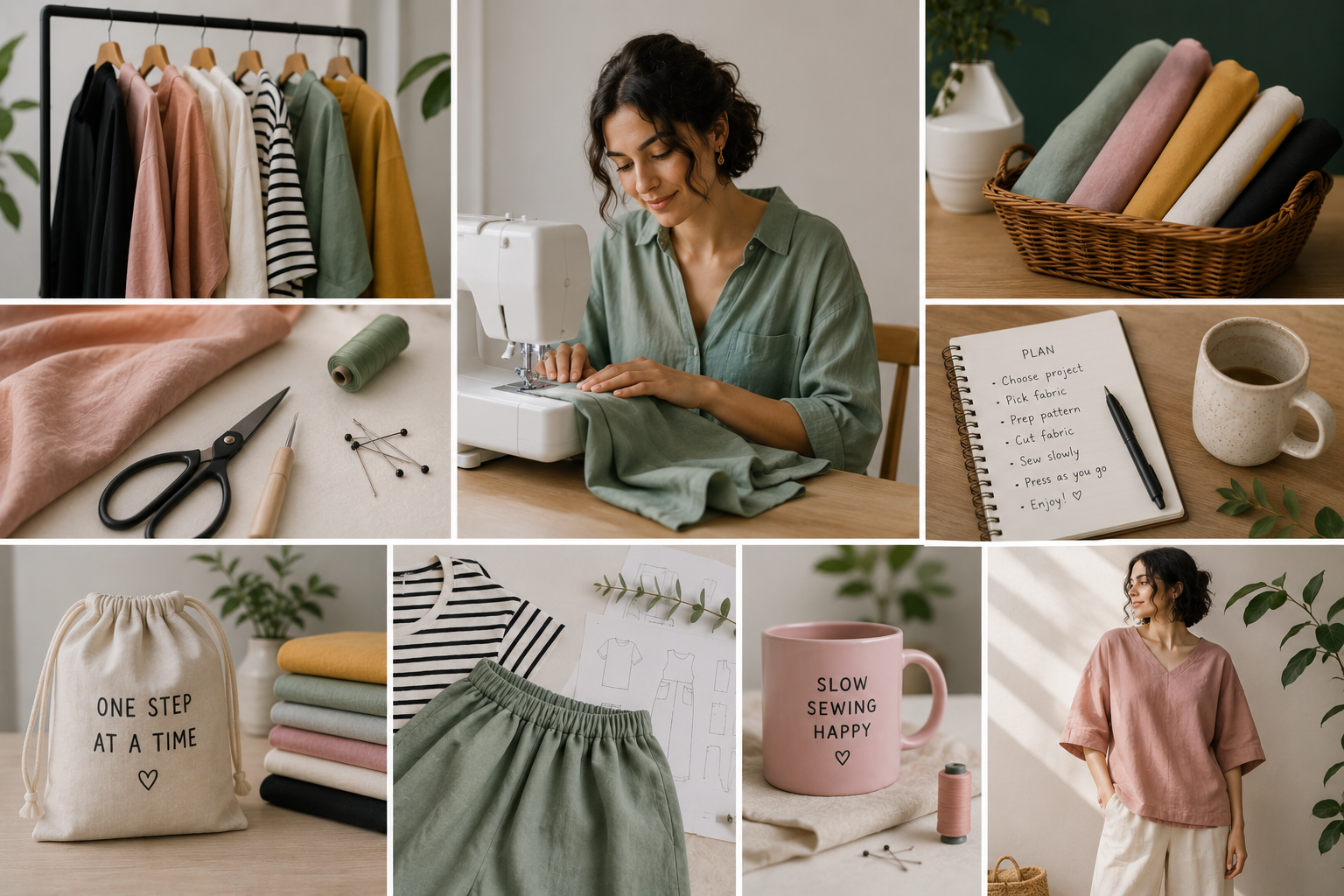
The first time you sit at a sewing machine, even threading it can feel like a test. The good news is that learning how to sew for beginners doesn’t have to start with fitted dresses, invisible zippers, or confusing pattern symbols. It can start with one straight seam, one simple project, and the relief of realizing, “I can actually do this.”
If you’re brand new to sewing, the fastest way to enjoy it is to make everything smaller, simpler, and more forgiving than you think it needs to be. Sewing becomes stressful when beginners try to learn every technique at once.
You don’t need to master every fabric, tool, or stitch before making something you’ll love. You simply need the right first project.
Start with the right sewing setup
You don’t need an expensive sewing room.
A basic sewing machine with a straight stitch and zigzag stitch is enough. Add a good pair of fabric scissors, pins or clips, a measuring tape, an iron, and—most importantly—a seam ripper.
Every sewist uses one.
A clean kitchen table works perfectly as a sewing space. Keep your machine in front of you, your tools nearby, and enough room behind the machine so the fabric doesn’t pull while you sew.
Before making your first project, spend twenty or thirty minutes simply getting comfortable with your machine.
Practice:
- sewing straight lines
- sewing curves
- stopping with the needle down
- turning corners
- adjusting stitch length
Those simple exercises build confidence much faster than reading about sewing ever will.
Choose a first project you’ll actually finish
This is where many beginners accidentally make sewing harder than it needs to be.
A fitted shirt may look beautiful, but it also requires accurate collar construction, sleeves, buttonholes, and careful fitting.
A much better first project is something relaxed and forgiving.
Great beginner projects include:
- oversized tops
- simple skirts
- tote bags
- backpacks
- relaxed everyday clothing
For example, a relaxed project like the Drawstring Ruched Back Top introduces garment sewing without overwhelming you with difficult fitting. The silhouette is comfortable, modern, and leaves room for small mistakes while still looking intentional.
Fabric choice matters more than beginners think
Many people assume beautiful fabric automatically makes a beautiful project.
In reality, choosing beginner-friendly fabric is often more important than choosing the perfect color.
Stable woven fabrics such as:
- cotton poplin
- cotton canvas
- linen blends
- quilting cotton
are much easier to sew than slippery satin or stretchy jersey.
Medium-weight woven fabrics stay flatter while cutting, pinning, and sewing, making every step easier.
That extra stability helps your finished project look neater—even if you’re sewing for the very first time.
Learn a few skills really well
One reason sewing feels overwhelming is because beginners try learning twenty skills simultaneously.
Instead, focus on just a handful:
- consistent seam allowance
- backstitching
- pressing seams
- pivoting corners
- finishing raw edges
Mastering those basics will improve almost every future project.
Remember that pressing isn’t something you do after sewing—it’s part of sewing itself.
A well-pressed garment often looks more professional than one with technically perfect stitching but poorly pressed seams.
Use beginner-friendly sewing patterns
The pattern you choose can make the difference between an enjoyable afternoon and a frustrating weekend.
A good beginner PDF sewing pattern should include:
- clear illustrations
- step-by-step instructions
- layered PDF files
- A4 and Letter formats
- A0 copy shop files
- projector files
The goal isn’t simply to tell you what to do.
It should explain why each step happens when it does.
Patterns designed specifically for beginners remove much of the guesswork that older commercial sewing patterns often assume you already understand.
Don’t be afraid of easy clothing
Many beginners avoid making clothes because they think garments are “too advanced.”
That isn’t always true.
Relaxed silhouettes are often easier than small accessories because they don’t require perfect precision everywhere.
A project like the Balloon Skirt is an excellent example. Its loose silhouette is forgiving, comfortable to wear, and introduces useful techniques like gathering and elastic waist construction without becoming overly technical.
Another great option is a Knee-Length Bubble Skirt, which combines a modern silhouette with straightforward construction, making it ideal for confident beginners ready for their second or third project.
Read the instructions before touching your fabric
One of the easiest mistakes beginners make is rushing straight into cutting.
Instead:
- read the instructions once
- check the size chart carefully
- gather your supplies
- identify every pattern piece
Pattern sizing is different from ready-to-wear clothing.
Always use your body measurements rather than assuming your usual clothing size.
Spending ten extra minutes preparing often saves hours of frustration later.
Mistakes are part of learning
Sooner or later you’ll sew something inside out.
You’ll forget to lower the presser foot.
You’ll stitch a pocket onto the wrong side.
Every sewist has done it.
A seam ripper isn’t evidence that you’re failing.
It’s evidence that you’re sewing.
The biggest difference between experienced sewists and beginners isn’t that experienced people never make mistakes.
They simply know mistakes are part of the process.
Build confidence with projects you’ll actually use
One of the fastest ways to stay motivated is by making projects that become part of everyday life.
Imagine sewing:
- a backpack you carry every day
- a comfortable weekend top
- a skirt you wear all summer
Those projects feel rewarding because they leave the sewing room and become part of your wardrobe.
If you’d rather start with an accessory, the Modern Geometric Backpack is a practical way to learn techniques like topstitching, straps, and working with heavier fabrics while making something genuinely useful.
When sewing goes wrong, simplify
If your machine skips stitches…
…change the needle.
If the thread bunches underneath…
…completely rethread the machine.
If the seams look wavy…
…slow down and let the feed dogs move the fabric naturally.
Most sewing problems have surprisingly simple solutions.
Trying to solve everything at once usually creates more stress than the original problem.
The fastest way to improve is to finish projects
Practice matters.
But finished projects teach even more.
Every completed project helps you understand construction, fabric behaviour, and sewing order in a way that practice scraps never can.
Your first project won’t be perfect.
Neither will your second.
But each finished piece makes the next one easier.
That’s why it’s worth choosing patterns designed to help beginners succeed rather than impress experienced sewists with unnecessary complexity.
Whether it’s a relaxed top, a comfortable skirt, or a practical backpack, completing something you’ll actually use is one of the most rewarding ways to build sewing confidence.
Start simple.
Choose stable fabric.
Follow clear instructions.
And remember—you only have to sew one seam at a time.
Leave a Reply
You must be logged in to post a comment.